Notes from real runs
Measured write-ups and working guides. Each one names the settings and the compromises, because an article that reports only the good half is an advert.
Formats
Why your GLB is still huge after simplifying
A measured run cut a model's triangle count by 83% and its file size by 4.7%. That gap is the whole point, and it decides what to optimize next.
- file size
- web performance
- glTF
MCP
MeshCrunch MCP prompts: inspect, price, then optimize
Copyable prompts for driving MeshCrunch from an MCP client: reading your library, pricing an operation, simplifying, generating LODs and converting.
- MeshCrunch MCP
- MCP prompts
- 3D optimization
Guides
What's wrong with this 3D asset?
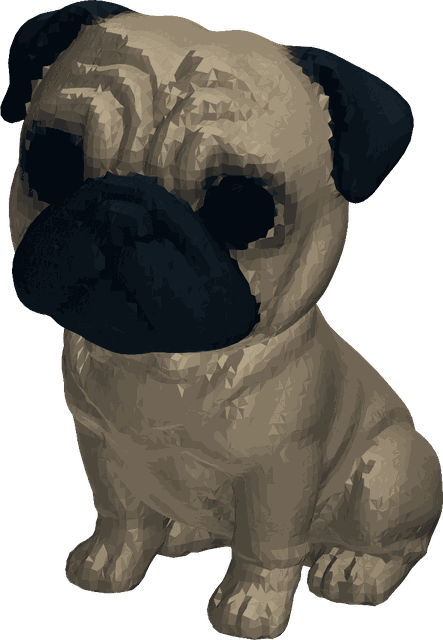
We ran MeshCrunch's browser-side inspection on a 92.3 MB AI-generated pug, before and after optimizing: what it found, what it skipped, and the report.
- asset QA
- 3D inspection
- mesh validation
Benchmarks
Cutting a two-million-triangle model down for the web
One AI-generated pug, 92.3 MB and 1,993,980 triangles, taken through auto simplification and a LOD chain. Every number is from a real run.
- mesh simplification
- LOD generation
- web performance
Geometry
When to rebuild a surface instead of simplifying it
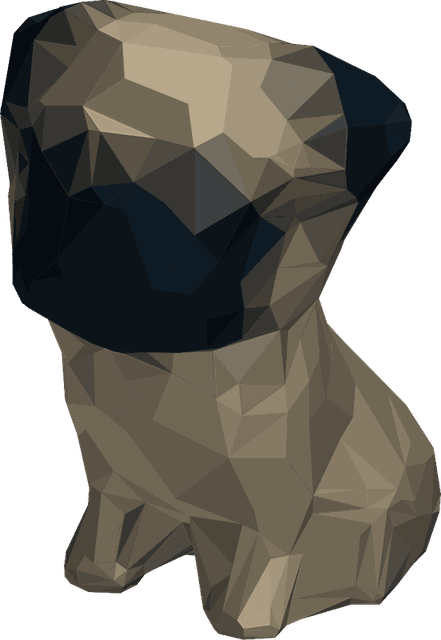
A watertight rebuild took the same 92.3 MB pug to 19,764 triangles and 387.2 KB. What that buys, what it discards, and when it is the right trade.
- surface reconstruction
- watertight mesh
- 3D optimization